sus4 Piano Chords
A sus4 chord omits the third and places a perfect fourth above the root. A common resolution keeps the root and fifth in place while the fourth moves down to the major third.
Sus4 structure, shown with C
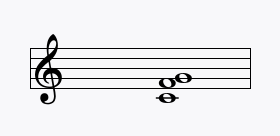
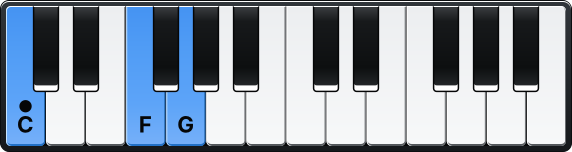
Csus4 is C–F–G. It omits the third, places the perfect fourth F above the root and retains the perfect fifth G, so the chord itself is neither major nor minor.
What sus4 quality means
Historically, a suspension is prepared, held over as the harmony changes and resolved downward by step. Modern sus4 can also name the 1–4–5 sonority without a literal preparation or required resolution.
Sus4 and resolution in context
These examples place the common 4→3 motion in two different harmonic functions. The resolution is typical, not compulsory.
Resolution and voice leading
Csus4 → C
- Common tones
- C · G
- Moving voice
- F → E
F moves down a semitone to E, while C and G remain as common tones.
Why sus4 is neither major nor minor
The third distinguishes major from minor. Because sus4 omits it, the chord symbol itself specifies neither quality; the key and neighboring chords shape its harmonic function and likely resolution.
Sus4, sus2 and add4
Sus4 uses 1–4–5 and sus2 uses 1–2–5; both omit the third. Add4 structurally contains both the third and fourth, giving it a different harmonic identity even when the fifth is omitted from a voicing.