Minor Piano Chords
Minor quality is defined by the minor third above the root, not by a fixed mood or key. The same minor triad can act as tonic in one context and predominant in another.
Minor structure, shown with C
C minor is C–E♭–G. E♭ is the minor third that defines the quality, while G completes the triad as its perfect fifth.
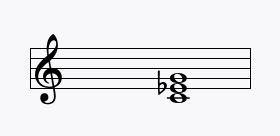
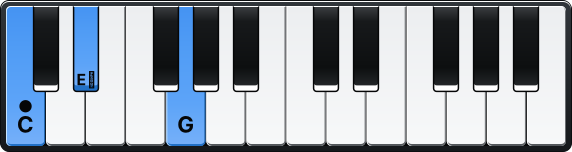
What minor quality means
A chord symbol names absolute pitches, while a Roman numeral names their role in a key. Cm and ii can describe the same chord in B♭ major from those two viewpoints.
Minor in harmonic context
The same minor quality can sound settled as a tonic or prepare the dominant in another key.
Hear the defining third change
Cm → C
- Common tones
- C · G
- Moving voice
- E♭ → E
E♭ moves up a semitone to E, while C and G remain as common tones.
Minor chord symbols
Cm is the most compact symbol; Cmin, Cmi and C− are also used. Cm7 is a different four-note chord that adds B♭.
Minor quality is not a minor key
A minor triad can belong to a major key: Cm is ii in B♭ major, for example. Only the surrounding harmony establishes the key and function.