sus2 Piano Chords
Sus2 leaves out the third, while add9 keeps it. Because the second can move to either a major or minor third without changing the root or fifth, sus2 does not define major or minor quality on its own.
Sus2 structure, shown with C
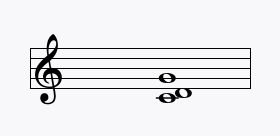
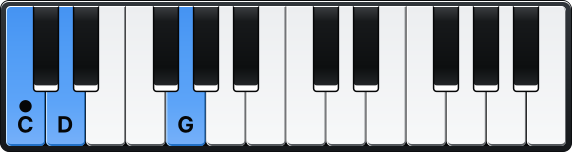
Csus2 is C–D–G. It omits the third and places the major second D above the root, leaving the chord without a defined major or minor third.
What sus2 quality means
Modern sus2 is a sonority label and need not be historically prepared or resolved. The same pitch set may also resemble an inversion of another root’s sus4, so bass and context matter.
Sus2 and resolution in context
The second can reveal either major or minor quality while the root and fifth remain in place.
Hear the second reveal the third
Csus2 → C
- Common tones
- C · G
- Moving voice
- D → E
D moves up a whole tone to E, while C and G remain as common tones.
Sus2 and add9 are different
Csus2 omits the third E. Cadd9 keeps E and adds D, so its major quality remains explicit.
Why the perceived root can change
C–D–G uses the same piano keys as Gsus4 in second inversion. The bass, metric emphasis and neighboring harmonies tell the ear which root is intended.