Dominant 7 Piano Chords
A bare 7 means Dominant 7, not Maj7. Its defining tritone explains both the C7–Cmaj7 difference and the strong pull of V7 toward a target chord.
Dominant 7 structure, shown with C
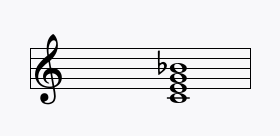
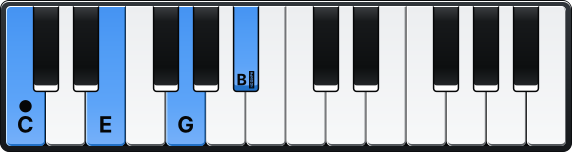
C7 is C–E–G–B♭: a C major triad plus the minor seventh B♭. E and B♭ form the defining tritone, which typically resolves inward to F and A when C7 moves to F.
What dominant 7 quality means
Dominant seventh is both a quality name and, in context, a function. C7 specifies C–E–G–B♭, but the surrounding key determines what it is dominant of.
Dominant 7 and resolution in context
These examples show C7 as the primary dominant of F and as a secondary dominant inside C major.
Resolution and tendency tones
C7 → F
- Common tones
- C
- Moving voice
- E → F · B♭ → A
E moves up a semitone to F and B♭ moves down a semitone to A, while C remains as a common tone. This three-note voicing omits G.
C7 and Cmaj7 are different chords
A bare 7 implies a minor seventh above a major triad, so C7 contains B♭. Cmaj7 explicitly raises that chordal seventh to B.
The symbol does not name the key
C7 is V7 in F major, V7/IV in C major, and can behave differently in blues. The absolute symbol supplies notes; context supplies function.